
Open any before-and-after gallery of painted kitchen cabinets and the reaction is always the same: “That’s the same kitchen?” A color change does more for a tired kitchen than almost any other single project — it modernizes the room you spend the most time in, for a fraction of the cost and timeline of a full replacement.
Where a cabinet replacement can run $4,000 to $24,000 or more for a mid-size kitchen and take weeks of demolition1, professional cabinet painting typically lands between $1,992 and $4,497 and wraps up in about a week.2
That transformation isn’t magic, though — it’s the result of a meticulous process. The paint itself is almost never why a cabinet job fails or succeeds. It’s the prep underneath it. Below, we walk through exactly what goes into a professional cabinet paint job, how your cabinet material changes the plan, what to expect for cure time, which colors homeowners are choosing right now, and how to keep a fresh finish looking that way for years.
Is It Worth Painting Kitchen Cabinets Instead of Replacing Them?
For most kitchens, yes. If your cabinet boxes are solid, drawers glide, and you like your current layout, the color and finish are usually the only things making the room feel dated. Painting kitchen cabinets keeps your existing boxes and layout intact while giving you a completely different look — new hues, hiding dings and chips, and freshening up a room without ripping anything out.
Replacement only earns its higher cost when boxes are water-damaged, warped, or the layout genuinely doesn’t work for how you cook. For everything else, a professional repaint delivers most of the visual impact of a full remodel at a fraction of the price. For a deeper side-by-side on cost, timelines, and when each option makes sense, see our guide to cabinet refinishing vs. replacement.
How Do Professionals Prep and Paint Kitchen Cabinets?
A durable painted finish is built in five stages, and almost all of them happen before a drop of color goes on. Skipping or rushing any one of these is the single biggest reason cabinet paint fails early — industry estimates suggest around 80% of cabinet paint failures trace back to prep, not product.3
- Deep degreasing. Kitchen cabinets accumulate years of cooking oil, grease, and handling residue that’s often invisible to the eye but prevents paint from bonding. A dedicated degreaser (not just soap and water) removes this film completely.
- Sanding and deglossing. Existing paint, stain, or lacquer is scuff-sanded to break down the glossy surface and give the primer something to grip. The goal isn’t to strip the finish — it’s to change its surface profile so the next coat can bond.
- Filling and repairs. Dings, dents, old hardware holes, and small gouges are filled with wood filler or putty and sanded smooth so they disappear under the new finish rather than showing through it.
- A quality bonding primer. Cabinets get a primer engineered specifically for adhesion on difficult, low-porosity surfaces — not standard wall primer, which doesn’t hold up to cabinet-level wear and handling.
- A durable, sprayed topcoat. The final color goes on as a cabinet-grade enamel, typically sprayed for a smooth, factory-like finish free of brush marks, in thin, even coats rather than one heavy one.
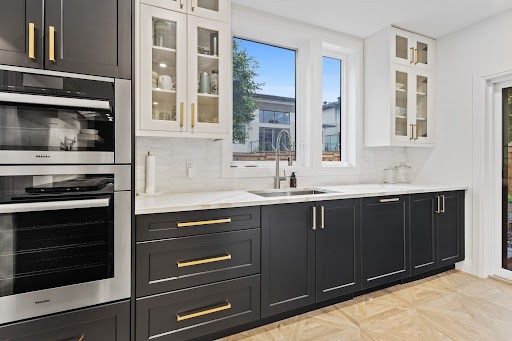
This is exactly why hiring a professional cabinet painting crew pays off: meticulous prep is what separates a painted finish that lasts for years from one that starts chipping within months.
Does Your Cabinet Material Change the Process?
Not every cabinet is built the same way underneath, and material affects how paint behaves and how long it holds up.
Solid Wood
Real wood takes paint well and holds up to sanding and repeated repaints over time, but grain and panel joints can telegraph slightly through the finish, and any stained wood needs a stain-blocking primer to prevent tannins from bleeding through the topcoat.
MDF (Medium-Density Fiberboard)
MDF has no wood grain, which is actually why many painted doors use it — it produces a clean, continuous painted surface. The tradeoff is moisture sensitivity: MDF can swell and deteriorate if it gets wet, so oil-based primers and paints are generally recommended over water-based products to avoid that swelling, and any damaged or delaminating MDF should be assessed before committing to a repaint rather than after.
Laminate
Laminate’s slick, factory-sealed surface is durable against heat and stains, but that same slickness means paint has nothing to grip without proper de-glossing and a bonding primer. Skipping this step is one of the fastest ways to see peeling on laminate cabinets within the first year.
Knowing your cabinet material before you start (or before you hire someone) is part of setting honest expectations for the finished result.
How Long Do Painted Cabinets Take to Cure?
“Dry to the touch” and “fully cured” are two different things, and mixing them up is how a lot of new paint jobs get damaged in the first month. Most cabinet paint feels dry within a few hours, but full hardness — the point where the finish resists chipping, scratching, and cleaning products — takes much longer:
| Paint type | Dry to touch | Full cure |
| Water-based (most common) | 1–4 hours | Up to 30 days |
| Oil-based | A few hours | 7–14 days |
During that early curing window, treat your cabinets gently: avoid slamming doors, don’t hang heavy items on them, skip aggressive cleaning, and give spills a quick wipe rather than a scrub. Curing continues quietly in the background even after doors are reinstalled — patience in that first month protects the finish for years to come.
What Are the Most Popular Painted Cabinet Colors Right Now?
If you’re picturing your own before-and-after, these are the looks showing up most often in 2026 kitchens:
Classic White Shaker
Still the most requested painted kitchen cabinet look, and for good reason — it’s timeless, brightens small kitchens, and resells well. Warm whites like Benjamin Moore White Dove and Sherwin-Williams Alabaster are outperforming stark, cool whites this year. Pair with warm-toned quartz or butcher block counters and brass or matte black hardware.
Two-Tone Islands
A contrasting island — often a deep green, navy, or espresso tone against white or cream perimeter cabinets — remains one of the most popular ways to add personality without repainting the entire kitchen. Benjamin Moore’s 2026 Color of the Year, Silhouette AF-655, a deep espresso-charcoal, is a strong pick for exactly this.4 Pair darker islands with lighter stone counters to keep the contrast from feeling heavy.
Warm Greige
Warm neutrals — mushroom, taupe, and greige — are steadily replacing cool gray as the go-to neutral, a shift reinforced by Sherwin-Williams naming Universal Khaki SW 6150 its 2026 Color of the Year5 and National Kitchen & Batth Association’s 2026 trend data showing neutrals still leading kitchen color choices6. Pair warm greige with brushed gold, brass, or warm nickel hardware and avoid stark white or cool-gray counters that can clash with the undertone.
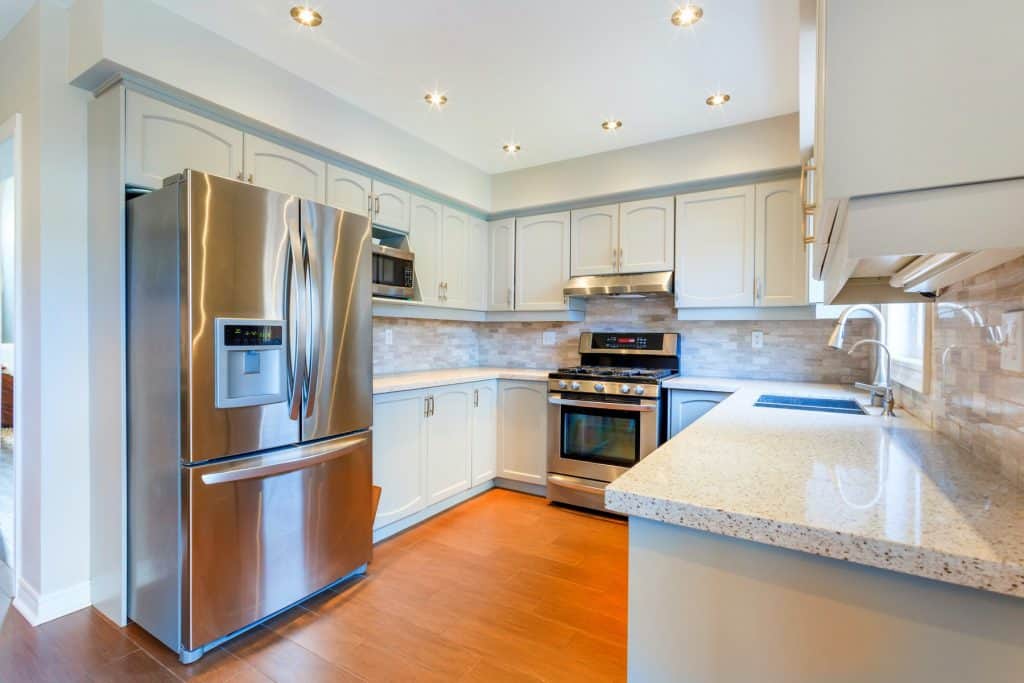
For a deeper look at 2026 palettes and how to choose between them, see our full guide to best paint and colors for kitchen cabinets.
How Do You Clean Painted Kitchen Cabinets Without Dulling the Finish?
A gentle, regular routine protects a painted finish far better than an occasional hard scrub. Stick to:
- A soft microfiber cloth with warm water and a small amount of mild dish soap
- Wiping in the direction of the grain or panel, then drying with a second clean cloth to prevent streaking
- A quick wipe-down weekly, rather than letting grease build up near the stove and cleaning it out aggressively later
Avoid bleach, ammonia, vinegar or citrus-based cleaners, and abrasive sponges or Mr. Clean® Magic Erasers pads — all of them dull sheen and wear down painted finishes over time, especially around handles and high-touch edges. Treated gently, a professionally painted finish typically holds up well for 8 to 15 years before it needs a refresh — DIY jobs with rushed prep are commonly closer to 2 to 3 years.
Why Do Rushed DIY Cabinet Paint Jobs Peel?
We get this question a lot from homeowners who tried a weekend cabinet project and watched it fail within a year. It almost always comes down to the same shortcuts:
- Skipping degreasing. Grease left on the surface creates a release layer that paint can’t fully bond to, no matter how good the paint is.
- Using wall paint or wall primer. These aren’t built for the handling, moisture, and heat cabinets face daily.
- Not deglossing enough. A slick existing finish needs real scuff-sanding, not a quick pass with a sanding sponge.
- Rushing cure time. Reinstalling doors and using cabinets hard before the finish fully hardens leads to dents, sticking, and lifted paint at edges.
None of these steps are difficult on their own, but skipping any one of them is where a paint job that “looks fine for a few weeks” starts to chip and peel a few months later.
Ready for Your Own Kitchen Cabinet Refresh?
A fresh coat of color on your cabinets is one of the highest-impact, lowest-disruption upgrades you can make to your kitchen — and getting a finish that actually lasts comes down to the prep, primer, and paint system behind it. Our team of professional cabinet painters have built a reputation across Grants Pass and Southern Oregon for doing that work right the first time, from degreasing and sanding through the final sprayed topcoat.
Ready to see your own before-and-after? Contact Good Neighbor Painting today to book your free cabinet consultation and get a personalized quote for your kitchen.

FAQ About Painting Kitchen Cabinets
How long does cabinet paint last?
A professionally painted, properly prepped finish typically lasts 8 to 15 years with normal use and gentle cleaning. Rushed DIY jobs with inadequate prep or wall-grade paint often show chipping within 1 to 3 years.
Can you paint over stained cabinets?
Yes. Stained cabinets don’t need to be stripped in most cases — they need thorough degreasing, scuff-sanding to break down the existing topcoat, and a stain-blocking or bonding primer to prevent tannins from bleeding through the new color. Stripping only becomes necessary when the existing finish is already failing, heavily contaminated with grease, or built up from many past refinishing coats.
Do you have to remove cabinet doors to paint them?
Removing doors and drawer fronts isn’t strictly required, but it produces a noticeably smoother, more even finish since doors can be laid flat and sprayed without drips, gravity, or hardware in the way — which is why most professional jobs handle doors off-site or in a dedicated spray area.
Sources:
- Angi. “Cost to Refinish Cabinets.” Angi, https://www.angi.com/articles/cost-to-refinish-cabinets.htm.
- HomeAdvisor. “How Much Does It Cost to Install or Replace Kitchen Cabinets?” HomeAdvisor, https://www.homeadvisor.com/cost/cabinets/.
- EAG Painting. “The Most Common Cabinet Painting Problems (And How to Fix Them).” EAG Painting, https://www.eagpainting.com/cabinet-painting/cabinet-painting-problems/.
- Benjamin Moore. “Silhouette AF-655”, https://www.benjaminmoore.com/en-us/paint-colors/color/af-655/silhouette
- Sherwin-Williams. “2026 Color of the Year.” Sherwin-Williams, https://www.sherwin-williams.com/en-us/color/color-of-the-year/2026.
- National Kitchen & Bath Association. “NKBA & KBIS Releases Annual 2026 Kitchen Trends Report.” NKBA, https://nkba.org/press/nkba-kbis-releases-annual-2026-kitchen-trends-report/.